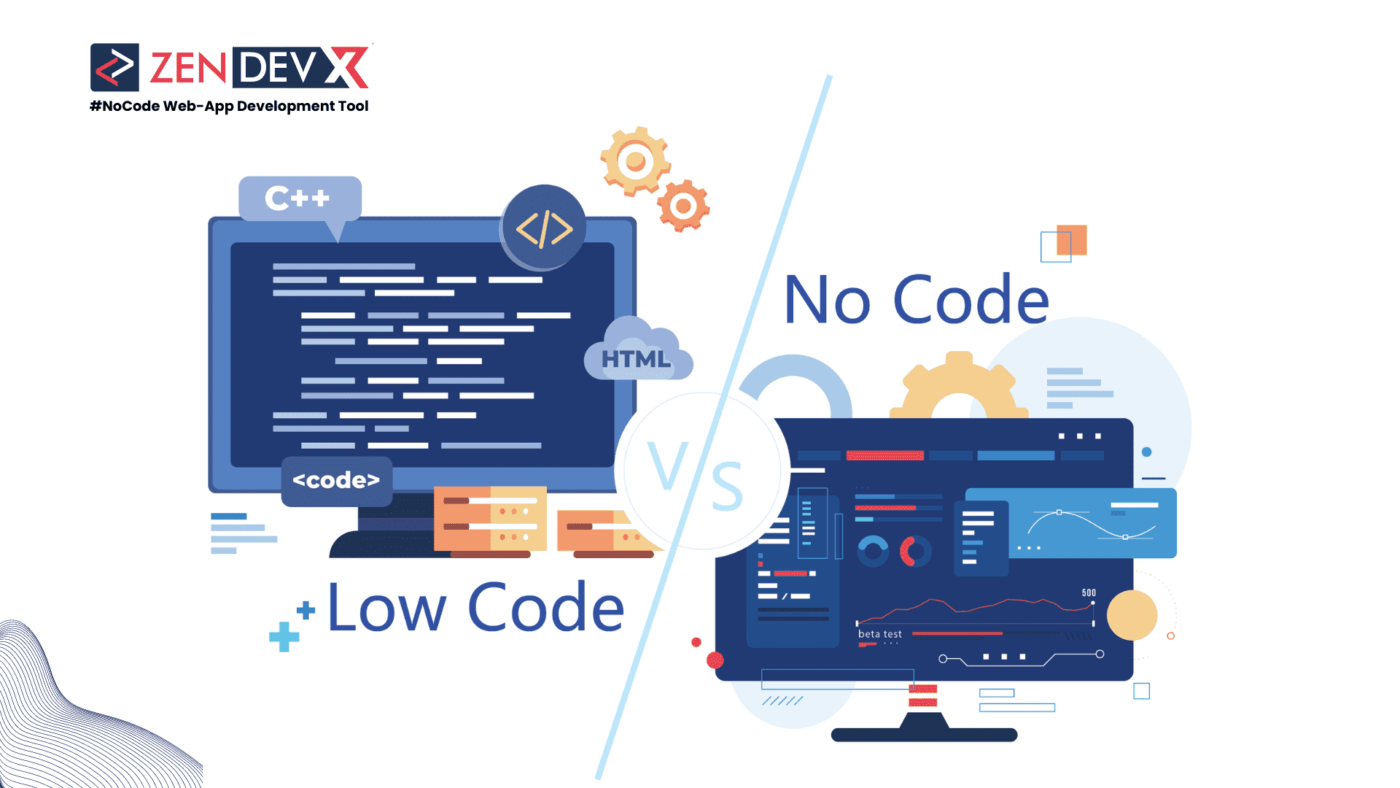
What is no code ?
Exactly what it sounds like is none of codes. Any platform with a visual interface enabling users to create websites and applications free from coding is a basic description. At least time almost everyone has used what formally qualifies as a no code platform. You have utilized a no coding platform, for instance, if you have ever created a website with Squarespace or WordPress.
Developing an application or website requires a working knowledge of coding; but, without code solutions, this is not required. One may possibly create a working application even with zero coding skills.
Benefits call for either minimal or no training.
There is no code solution with an easy drag and drop interface that lets everyone in your company create a functional application or website. Generally speaking, no code solutions call for extremely minimal instruction. While a quality no code solution takes zero experience to utilize, road bumps could call for the attention of an IT team.
Democratizes Technology Development
Especially when creating internal tools, back and forth between your IT staff and the rest of the business is a known bottleneck. Eliminating the need for complicated coding, no code solutions let someone from HR create an application. Should they require tech help, they will be more suited to inform developers of such demands.
More general departmental openness resulting from this is always a benefit when implementing new technologies.
Accelerated, simpler development
If all coding has to be done by hand, even a basic application is infamously time-consuming. Eliminating coding completely allows one to finish a chore usually requiring weeks or months in a few days.
Without a coding solution, you may also make adjustments to programs in a few minutes. The visual interface lets you quickly add a new feature or fix something isn’t working quite right.
Consents
When it comes to no code solutions, rigid templates are kind of a two-edged blade. Though you are confined to pre-written chunks of code, they are what enable you to create programs fast and effectively.
Applications cannot thus always be tailored to your preferences. More complicated applications—especially those meant for hyper-specific purposes—can often not be produced with no code platforms.
Problems of Security
Should you choose the no code path, be important to investigate your supplier to be sure they have a solid reputation free of security breach history. You are depending much on a third party provider since you have no control over your technology stack or implementation.
Even a decent no code platform brings inherent security concerns. Security upgrades stop when a corporation files for liquidation, so you could be exposed in the process.
Vendor Lock-In
Usually employing no code platforms results in a loss of proprietary rights. Vendor lock-in is a main issue since you have no idea how your backend code operates. You cannot just move to another platform if you are dissatisfied with your present provider.
This is even more justification for doing study to make sure the selected no code solution fits your business requirements.
What is low code ?
Between no code and hand coding, low code is a sort of happy compromise. Although they let some manual coding, low code platforms also provide a visual-based interface with drag-and-drop components. This implies greater chances for application and website personalizing.
Low code platforms provide many of the same benefits as none code platforms since they can cut up to 90% of the coding effort. They let you make rapid little adjustments, ease bug repairs, and accelerate progress. Still, they have some special benefits that you won’t receive from no code platforms.
Benefits more flexibility
One of the most clear benefits of low code platforms is their possible flexibility compared to no code variants. You can do some hand coding even though you have drag and drop tools akin to no code. This implies that you are not limited by strict models connected with no code platforms.
Usually sold to experienced developers wishing to save time and yet have some creative power over their applications and websites, low code platforms
Build More Complex Applications
Open APIs, scalable designs, and cloud/on-site deployment options provide developers a great deal of control over testing, performance, and quality. Low code tools let you construct significantly more complicated applications.
Although low code platforms can be utilized for mobile apps and websites needing more bespoke integration with other data sources and systems, no code tools are typically excellent when used to construct front-end use-cases.
More Tools for Your IT Department
Sometimes a minor remedy calls for a very specialist knowledge set not usually possessed by your IT staff. This can greatly slow down application development while your staff works to pick up new skills or even outsources some jobs.
Low code solutions free most of the manual coding, so your team has more resources at hand. Low code systems give the means to accomplish difficult jobs simply a few clicks.
Drawbacks
Challenged To Learn
With a no code solution, almost everyone can hit the ground running; but, low code is not the case. Using even the most advanced low code platforms requires at least some knowledge with coding and web or app development.
Working with a low code platform, it is unlikely your HR team will be able to create an internal application if you are looking for them to.
Difficult to develop business apps
Though they can accomplish a lot, low code solutions most definitely cannot achieve everything. Though even the greatest low code platforms typically fall short of your goals, businesses sometimes incorrectly believe a low code platform will help create big scale enterprise apps fast.
Rarely can low code platforms offer the degree of scalability, quality, performance, and other needs for business apps. Usually, software developers should manage these kinds of initiatives.
Temporary fix
Low code platforms allow you to create more complex applications, which typically carry more responsibility than simpler ones. In the near future, developing an application on a third-party platform can be a fantastic answer; but, your company’s needs might transcend the capacity of the application.
Like with no code platforms, your backend code is not fully disclosed. Moving platforms can be challenging if your needs go beyond the reach of minimal code apps.
Should I apply low or no code ?
This is a complex issue with no usually clear-cut response. You should review your particular requirements regarding web or app development as well as the capabilities offered by several low- and no-code platforms.
Generally speaking, nevertheless, more complicated applications call for low code solutions; generally speaking, simpler applications benefit from no code apps.
In essence, No code performs better for…
- Tracking, analytics, and reporting tools for internal consumption
- Tools needing regular updating
- Mobile apps:
And low code usually suits for…
- More sophisticated uses needing data source and system integration
- Use for applications needing less updates
- Foundational apps for mission critical purposes
Remember, especially with no code answers getting ever more complex, there are no clear-cut rules here. For people with experience in software development, a no code approach could possibly work even for fundamental uses. Before selecting a provider, always thoroughly investigate.
Conclusion :
Low code solutions as well as no code can greatly accelerate web and application development. Although minimal code solutions usually work better for more complicated projects, ultimately it boils down to your particular requirements and the capacity of your provider.